




Vatican Museums and Sistine Chapel
More Tickets
Heading
More TicketsHeading
More TicketsVatican Museums & Sistine Chapel Tickets - Prices, Tours & Visitor Information
What Are the Vatican Museums and Sistine Chapel?
- Explore one of the world's most famous art collections inside Vatican City.
- Home to masterpieces by Michelangelo, Raphael and Leonardo da Vinci, the Vatican Museums attract millions of visitors every year.
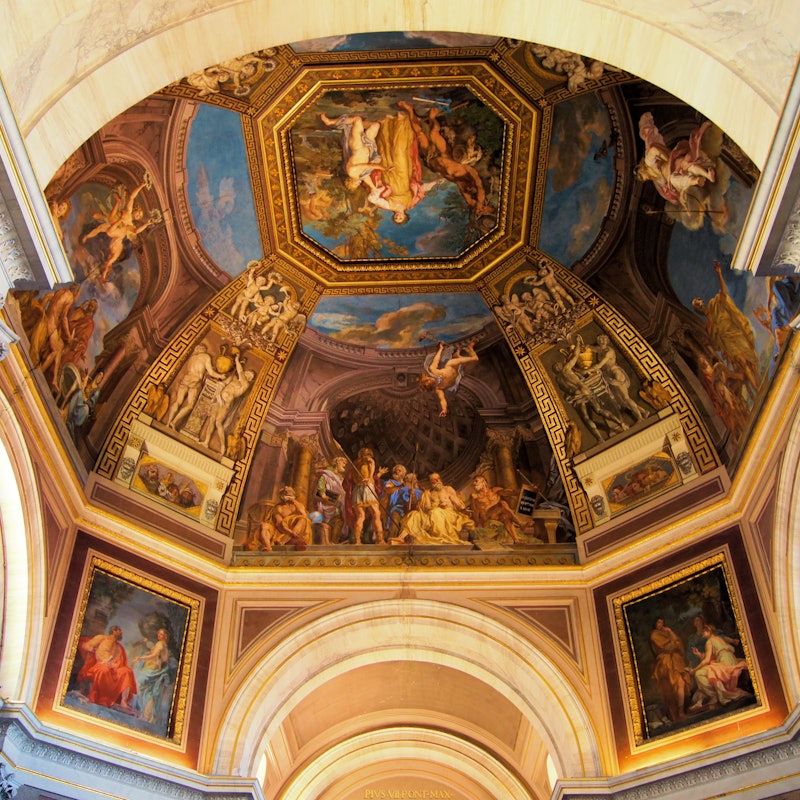
- Wander through spectacular galleries filled with Renaissance art, ancient sculptures and historic treasures before reaching the incredible Sistine Chapel, renowned for Michelangelo's iconic ceiling frescoes.
Quick Information
- Vatican Museums & Sistine Chapel Address: Vatican City, 00120
- Vatican Museum & Sistine Chapel Opening Hours: Daily from 08:00 - 20:00
- Recommended Visit Duration: 3-4 hours and arrive at least 15-20 minues before your entry time
- Best Time to Visit: Early mornings or weekdays
- Dress Code: Shoulders and knees must be covered
- Nearest Metro Stations: Ottaviano Station or Cipro Station, both on Line A
Vatican Museums & Sistine Chapel Ticket Options
Are the Vatican Museums & Sistine Chapel Worth Visiting?
The Vatican Museums & Sistine Chapel are amongst the most visited attractions in Rome and are worth visiting if:
- You are an art lover.
- You enjoy religious buildings steeped in history.
- You want to visit the smallest country in the world!
What Visitors Can See At The Vatican Museums & Sistine Chapel
The Vatican Museums contain one of the largest and most valuable art collections in the world.
- The Sistine Chapel and Michelangelo's famous ceiling frescoes
- Raphael Rooms and "The School of Athens"
- The Gallery of Maps
- Ancient Roman and Greek sculptures
- The Pinacoteca art gallery
- St. Peter's Basilica (depending on ticket type)
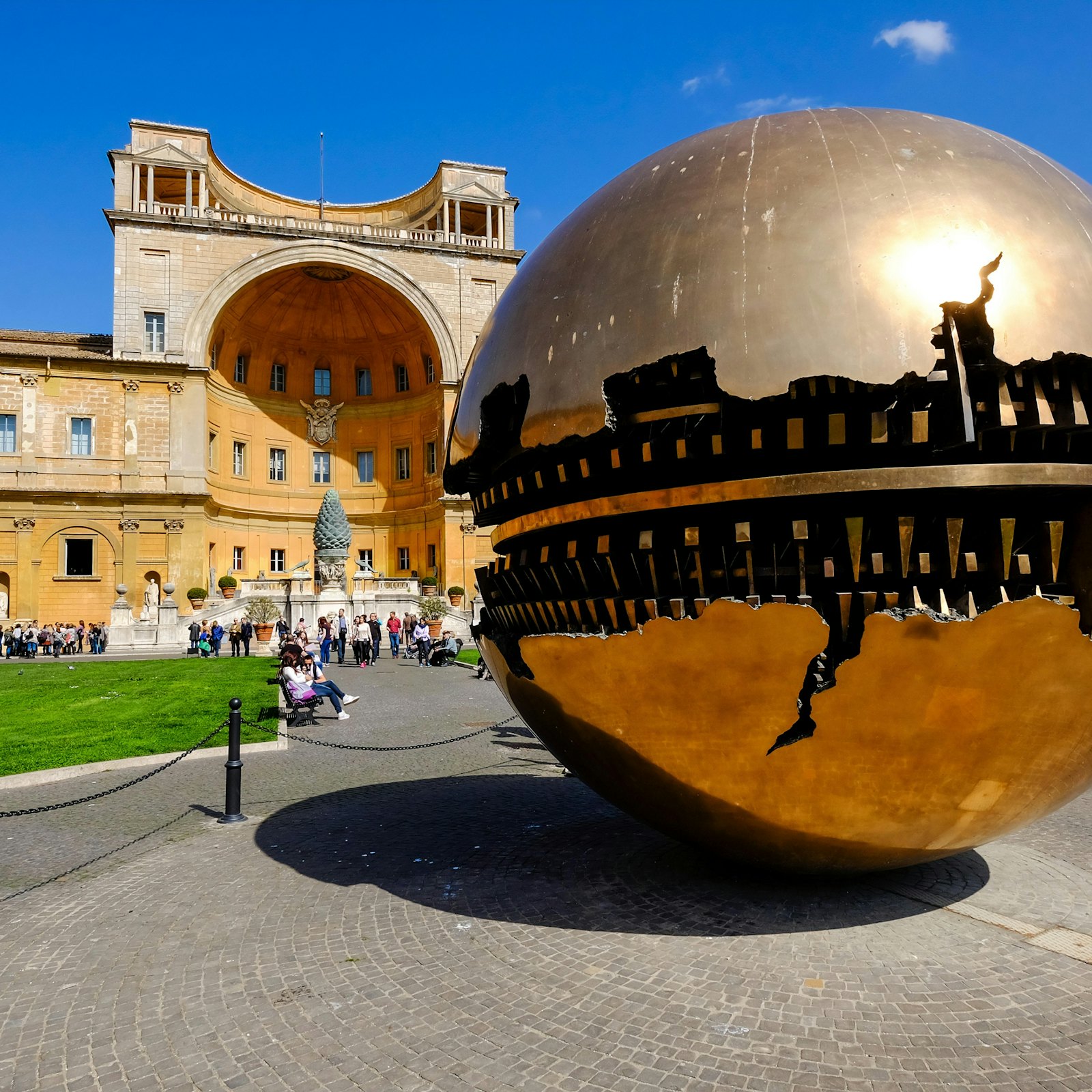
- Beautiful courtyards and Renaissance architecture
Vatican Museums Ticket Availability
- If you're planning to visit the Vatican Museums and Sistine Chapel, booking tickets in advance is highly recommended. Visitor numbers are limited each day and popular dates regularly sell out, especially during spring, summer and major holidays. Booking early gives you the best choice of entry times and helps avoid disappointment.
Popular Ticket Options
Vatican Museums & Sistine Chapel: Skip The Line Tickets
BESTSELLER
What's Included
- Prices from: €42.00
- Vatican Museums & Sistine Chapel: Entry Ticket
- Grants access to all open rooms and galleries so you can discover them at your own pace
- Guided Tour Options
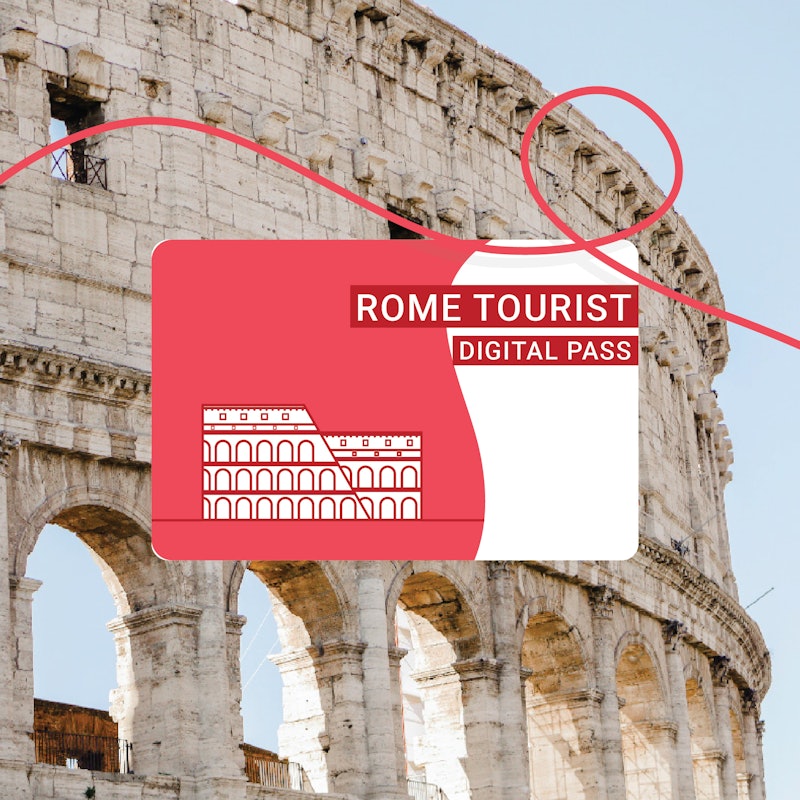
Rome Tourist Card
What's Included
- Tickets from €88.00
- Vatican Museums & Sistine Chapel OR Castel Sant'Angelo : Entry Ticket
- Colosseum & Roman Forum/Mamertine Prison: Entry Ticket
- St. Peter's Basilica OR Rome Pantheon: Entry Ticket
- Rome City Audio Guide (Download to your smartphone
- + Bonus Discounts
About The Vatican Museums & Sistine Chapel
In the middle of Rome is the smallest country in the world, Vatican City, which is home to the world famous Vatican Museums and Sistine Chapel.
Pope Julius II acquired the famed ‘Laocoön’ and ‘Apollo Belvedere’ sculptures in the 16th century, which laid the foundation for what would become the Vatican Museums.
Subsequent popes added to the collection and in the 18th century Pope Clement XIV established the ‘Pio-Clementino Museum’ at which point the Vatican Museums took an official and more formalized shape.
The collection eventually outgrew its original space which prompted the construction of additional wings and galleries and the expansion of the museums began.
The Vatican Museums are now made up of a network of museums, galleries, and courtyards which display an extensive range of art and historical artefacts.
Highlights at The Vatican Museums
The Sistine Chapel
Probably the most famous of all the museums. Consecrated in 1483, the Sistine Chapel has become synonymous with artistic genius, thanks to Michelangelo.
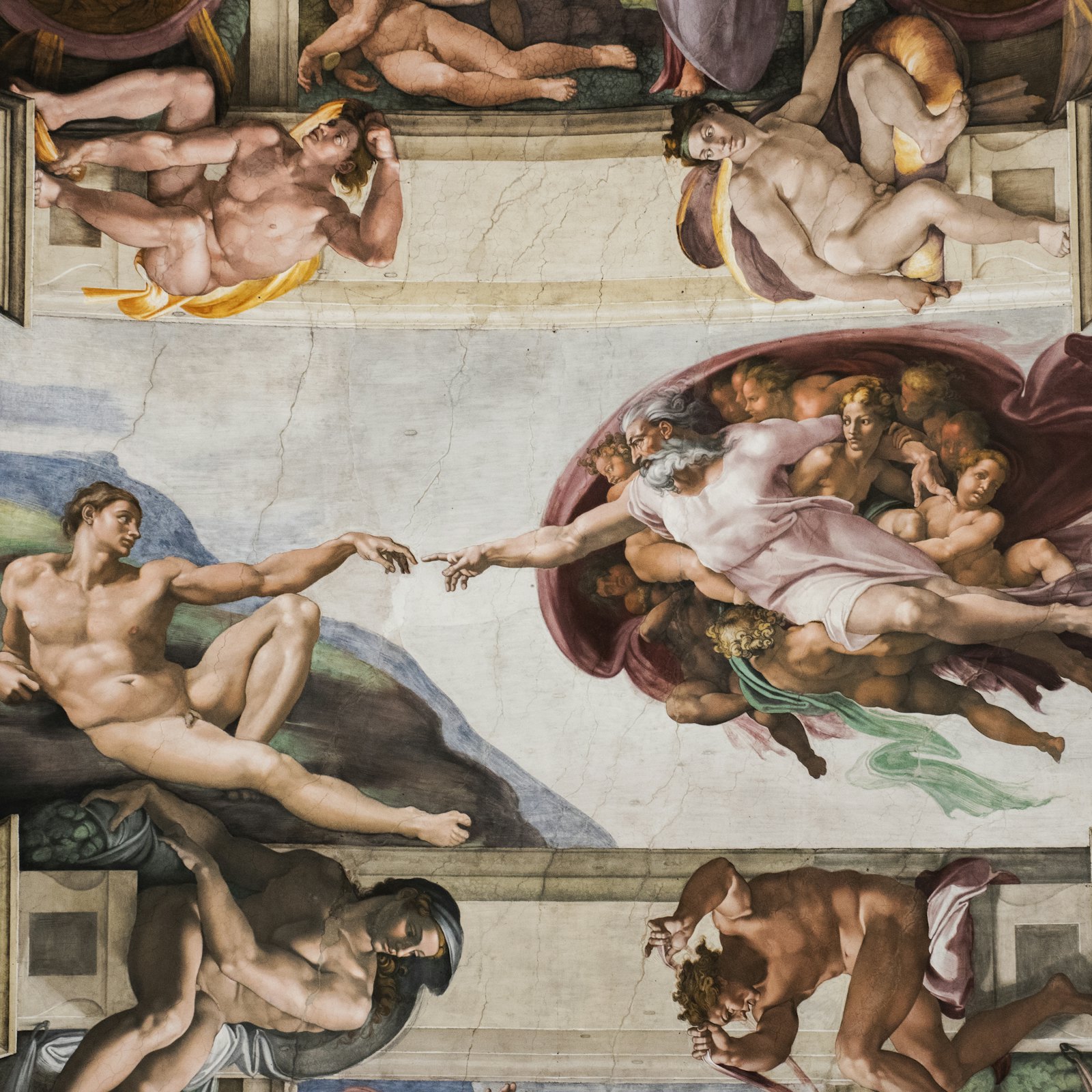
His ceiling frescoes that depict scenes from the Book of Genesis are arguably some of the most renowned and famous art in the chapel and known around the world.
The frescoes are a combination of colour, movement, and narrative. The "Creation of Adam," with the outstretched hands of God and Adam, epitomizes the connection between humanity and the divine.
The entire ceiling is a visual feast, with intricate details and masterful use of perspective creating a sense of depth and grandeur.
Michelangelo's "The Last Judgment" is on the altar wall at the Sistine Chapel. The monumental fresco was completed in 1541 and depicts the second coming of Christ and the final judgment of souls.
A whirlwind of emotion and movement, showing the artists unparalleled ability to capture the human form and convey profound spiritual themes.
Michelangelo's frescoes may be the most famous pieces and do take centre stage, but the Sistine Chapel is also home to other artistic treasures. The chapel's walls are covered with works by Botticelli, Ghirlandaio, and Perugino which all add to the collection as well as the Papal Throne.
Pio-Clementino Museum
Inaugurated by Pope Clement XIV in the 18th century and focusing on classical antiquity. Its halls are filed with sculptures that echo the grandeur of ancient Greece and Rome.
The collection includes the famous ‘Belvedere Torso’ to the ‘Apollo Belvedere’ and the ‘Laocoön Group’. which were part of the founding collection.
The Pinacoteca
A collection of around 460 paintings, including masterpieces by some of the greatest artists from Italian history such as Crespi, Caravaggio, Raphael, Melozzo da Forli, Perugino, Leonardo, Tiziano and Veronese.
Architect Luca Beltrami was commissioned by Pius XI to create a building with lighting conditions to show the art at it's best, as well as considering the location to ensure preservation of the art. The gallery was inaugurated in October 1932.
The Gallery of Maps
La Galleria delle Carte Geografiche is a journey through the evolution of mapmaking and will fascinate visitors with an interest in geography and cartography.
Commissioned by Pope Gregory XIII in the late 16th century, it features a series of topographical maps depicting Italy's regions during that period.
The intricate details and colours of the maps, which were all done by hand, show the skill of the Renaissance cartographers who crafted them. They were created for serving practical geographical purposes and are also works of art in their own right.
Each map tells a story, not only of the landscapes but also of the political and cultural dynamics of Renaissance Italy. Visitors can keep an eye out for details added such as sea monsters and other mythological figures, which add an extra layer of fascination to the historical cartographic treasures.
Raphael Rooms
Named after the illustrious Renaissance artist Raphael, the ‘Stanze di Raffaello’ are made up of four interconnected rooms filled with frescoes that exemplify the pinnacle of Renaissance art.
Raphael, along with his workshop, created the masterpieces between 1508 and 1524, and they still continue to be celebrated for their artistic innovation and cultural significance today.
One of the most famous frescoes in the Raphael Rooms is "The School of Athens," which is in the Room of the Segnatura.
The masterpiece features a gathering of philosophers, scientists, and scholars from different historical periods. The central figures, Plato and Aristotle, appear to be in deep contemplation and are surrounded by other luminaries such as Socrates, Euclid, and Ptolemy.
Famous pieces at the Vatican Museums Include:
- Caravaggio and his ‘Deposition of Christ’, 'The Entombment of Christ', 'Crucifixion of St. Peter'
- Van Gogh's 'Pietà'
- Raphael's 'Oddi Altarpiece', 'Deliverance of Saint Peter', 'The School of Athens', 'The Mass at Bolsena'
- Rodin's 'The Thinker'
- Leonardo Da Vinci's 'Saint Jerome in the Wilderness'
- Bernini's 'Charity with Four Children', 'Tomb of Pope Urban VIII' & 'Models for St Peter's Chair'
- Michelangelo's 'The Last Judgement', 'St. Matthew', 'The Creation of Adam', 'Sistine Chapel Ceiling'
Fun Facts
- The Swiss Guard is the smallest and oldest standing army in the world, responsible for the security of the Vatican.
- The St. Peter's Square Obelisk (the tall stone pillar) was actually originally built in Egypt, however it was moved to Rome by Emperor Caligula and was eventually placed in St. Peter's Square by Pope Sixtus V in 1586!
- Although the euro is the official currency used in the Vatican, it does still have its own currency (the Vatican lira) and it's still used for ceremonial purposes! However, you can still spend Euros there too!
- The Vatican Gardens cover more than half of the Vatican City's territory. They are private and can only be visited on guided tours.
- The dome of St. Peter's Basilica, designed by Michelangelo, is one of the largest domes in the world. It offers panoramic views of Rome and the Vatican City.
- Latin is the official language of the Vatican, but Italian is commonly used for everyday communication.
Check Availability & Book Vatican Museums Tickets
Vatican Museums & Sistine Chapel
More TicketsUseful Information About Vatican Museums & Sistine Chapel
Vatican Museums and Sistine Chapel Address
- Vatican Museums, Vatican City, 00120
Vatican Museums and Sistine Chapel Opening Hours
- Monday: 09:00 - 18:00
- Tuesday: 09:00 - 18:00
- Wednesday: 09:00 - 18:00
- Thursday: 09:00 - 18:00
- Friday: 09:00 - 18:00
- Saturday: 09:00 - 22:30
- Sunday: Closed
How to get to the Vatican Museums
- Bus: Number 49 to Viale Vaticano
- Metro: Line A to Valle Aurelia, then a 5-minute walk
- Tram: Number 19 to Piazza del Risorgimento, then a 10-minute walk
Vatican City Fun Facts
- Vatican City is the smallest country in the world and only became an independent country in 1929.
- It is the only country in the world to have a cash machine with JUST Latin instructions on it.
- It has its own football team.
- The Vatican has less than 1000 residents.
- It is a UNESCO World Heritage Site.
- It is the only country on earth not to have its own prison.
- Its suggested the Vatican consumes more wine than any other country in the world (on a per capita basis).
- It is home to the shortest railway line in the world.
Vatican Museums & Sistine Chapel
More Tickets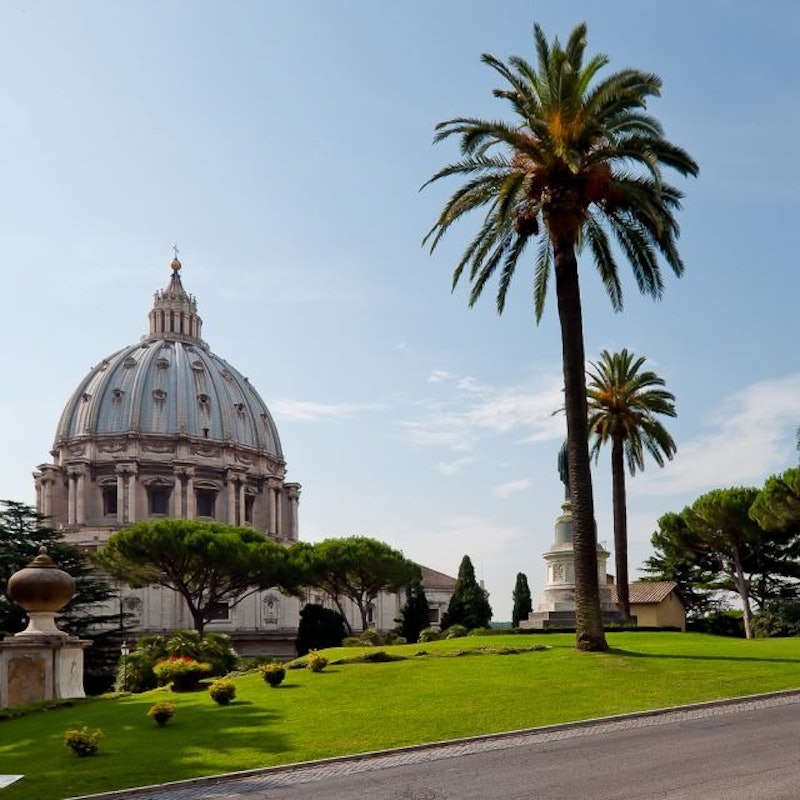
Vatican Museums & Sistine Chapel Tickets
FAQ

No, not always. Any tickets that include St. Peter's Basilica access should clearly confirm that under the what's included section. If it doesn't list the basilica, it means its not included.
Tickets for the Vatican Museums really do sell out. We always suggest you book in advance to try and avoid disappointment,
With the Vatican Museums and Sistine Chapel being a religious location, they don't like revealing clothes and low-cut clothes, sleeveless tops and see-through clothing aren't allowed and you will also likely be asked to remove hats on arrival. Any baggage such as backpacks or suitcases will need to be left in their cloakroom as well.
The Vatican Museums are rarely quiet but low season is classed as October - April. During summer months, early morning visits can be quieter. Mondays, Tuesdays and Thursdays can also be quieter. Wednesdays are generally very busy.
The Vatican Museums are the rooms in the Vatican that are home to some of the Catholic Church's vast collection of art and sculptures. The museums aren't independent museums scattered around the Vatican, but better described as the galleries, rooms, courtyards, staircases and chapels where the church stores and displays some of their collection.
Yes, the Vatican Museums and Sistine Chapel are wheelchair accessible. The Vatican also has disability-friendly toilets.
We recommend spending at least 3 or 4 hours exploring the Vatican Museums so you can enjoy the experience.
Although it is possible to buy at tickets at the ticket office, it is highly unlikely. Tickets are limited each day and most are sold out days if not weeks in advance. That is why we always recommend booking tickets online as it is easy and convenient to do and you are more likely to get your preferred time and date.
No - you do not need your passport to enter Vatican City. However, you must have a valid photo ID to enter the Vatican Museums and you can use your passport for that.
